
DoEEEt Technical Blog
Keep up with the latest updates about Hi-Rel Components, COTs and much more
Introduction to Norris-Landzberg equation for thermal cycling test definition
The Norris-Landzberg equation is that it is required by ECSS in many calculations. For example, ECSS-Q-ST-70-61 and several ESA Memos indicate that the use of this equation is mandatory in order to assess if the qualification perform of PBAs covers the environment of the mission. Similar methodologies are widely referenced in MIL and NASA standards
Detection of foreign material and cracks using Scanning Acoustic Microscopy
Scanning Acoustic Microscopy (SAM) enables non-destructive detection of internal cracks and foreign material within microelectronic device encapsulation. This analysis reveals critical defects that compromise mechanical and electrical reliability according to PEM-INST-001.
Pushing Boundaries: Cryogenic Testing Expertise for Space EEE Components at ALTER
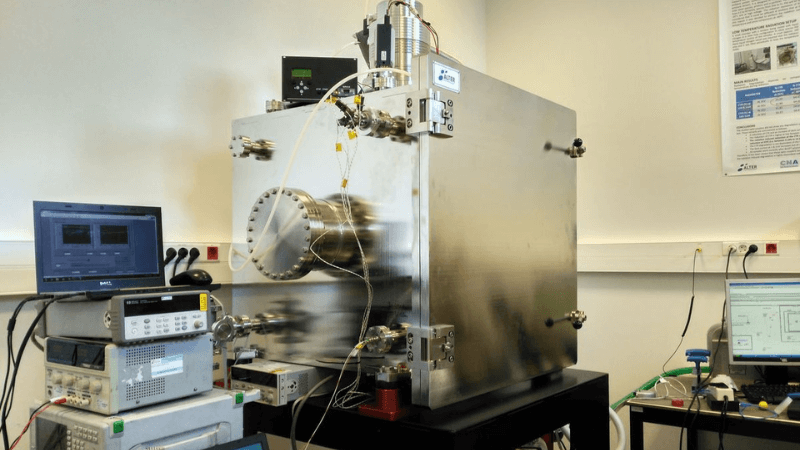
ALTER Technology is pushing the limits of space reliability through advanced cryogenic testing of EEE components for ESA’s ARIEL mission. Using state-of-the-art helium cryostats reaching temperatures as low as 10K, ALTER qualifies critical components, from microswitches to operational amplifiers—to ensure flawless performance in extreme thermal environments.
Introduction to Norris-Landzberg equation for thermal cycling test definition
The Norris-Landzberg equation is that it is required by ECSS in many calculations. For example, ECSS-Q-ST-70-61 and several ESA Memos indicate that the use of this equation is mandatory in order to assess if the qualification perform of PBAs covers the environment of the mission. Similar methodologies are widely referenced in MIL and NASA standards
Detection of foreign material and cracks using Scanning Acoustic Microscopy
Scanning Acoustic Microscopy (SAM) enables non-destructive detection of internal cracks and foreign material within microelectronic device encapsulation. This analysis reveals critical defects that compromise mechanical and electrical reliability according to PEM-INST-001.
Pushing Boundaries: Cryogenic Testing Expertise for Space EEE Components at ALTER
ALTER Technology is pushing the limits of space reliability through advanced cryogenic testing of EEE components for ESA’s ARIEL mission. Using state-of-the-art helium cryostats reaching temperatures as low as 10K, ALTER qualifies critical components, from microswitches to operational amplifiers—to ensure flawless performance in extreme thermal environments.
SRT-MICROCÉRAMIQUE – Space-Grade Ceramic Capacitors
SRT-MICROCÉRAMIQUE, a French manufacturer specializing in high-reliability ceramic capacitors, is now fully integrated into doEEEt with its ESCC 3009-Equivalent and COTS+ Class 1 families. With in-house PME manufacturing, extensive testing, and decades of experience in Space, Defence, Medical, and Industrial sectors, SRT-MICROCÉRAMIQUE offers fast, flexible, and robust alternatives to traditional suppliers.
Contain, Correct, Continue: Apogee’s Scalable Approach to Fault Management in Space
Discover how Apogee Semiconductor enhances space mission reliability through radiation-immune products and scalable fault containment architectures — enabling cost-effective, system-level resilience from ground to orbit.
Space Ceramic Capacitors with Flexible Testing : European Supply, Quality You Choose, Smarter Costs
Learn how SRT-Microcéramique develops space-qualified ceramic capacitors screened to ECSS-3009 and AEC-Q200 BME standards. Explore PME and BME technologies, retinning solutions, and fast, flexible sourcing for space applications.
Discover the ALTER EEE parts engineering and Product Assurance capabilities at your service
ALTER EEE and Product Assurance scenario: The team of Senior EEE parts and PA engineers at ALTER will guide and help your team to understand the key drivers for the selection of the most suitable parts for your design, based on the deep knowledge of space market as well as the main standards used in Europe (ECSS-Q-ST-60s), US (NASA GSFC, DLA MIL-PRFs and QPL/QMLs) and commercial market (AEC-Q, …).
C-SAM Analysis in Capacitors: Ensuring Reliability Before Assembly
C-SAM analysis is a non-destructive inspection method used to detect internal defects in capacitors, such as voids, cracks, and delaminations. At Alter Technology, we apply this technique to ensure reliability, prevent premature failures, and guarantee the highest quality before component assembly.
False Delaminations And Adhesions In Acoustic Inspection: Identification, Causes, And Verification Methods
Explore this technical note on how false delaminations and adhesions can significantly impact the reliability of acoustic inspections.
ALTER awarded ESA contract to evaluate non-hermetic optocouplers for high voltage space applications
ALTER TECHNOLOGY secures ESA contract to assess high-voltage non-hermetic optocouplers for next-gen space missions.
C-SAM Inspection Reveals Critical Delamination in Dual Switching Diode
Explore this technical note presenting an Inspection Reveals Critical Delamination in Dual Switching Diode
ISL73141SEH and ISL73148SEH: Radiation-Hardened SAR ADCs for space applications
The ISL73141SEH and ISL73148SEH are radiation-hardened 14-bit ADCs offering precision and reliability for mission-critical systems.
Advantages of a high precision ADC in space applications: The ISL71148 8-Channel SAR ADC
High precision ADC ensures accurate data acquisition and control in radiation-tolerant systems for space applications.
Radiation-Tolerant SAR ADCs in space exploration
Radiation-tolerant SAR ADCs provide precise, low-power signal conversion for resilient space-based data systems.
Renesas’ wafer-by-wafer Low Dose Rate Acceptance testing
Low dose rate acceptance testing ensures ELDRS resilience in space-grade components for long-term mission reliability.
Radiation-Tolerant plastic products: The future of cost-effective space electronics
Rad-tolerant plastic products from Renesas support cost-efficient, reliable performance in LEO and deep-space missions.
Radiation-Hardened vs. Radiation-Tolerant components for space applications
Rad-tolerant components offer cost-effective reliability for LEO missions and moderate radiation space environments.
How the ISL71610SLHM protects from signal interference
Signal interference in spacecraft is mitigated by radiation-hardened isolators ensuring reliable system communication.
How to select the best radiation-hardened components for your space project
Rad-Hard components are essential for ensuring space electronics resist TID and SEE effects in harsh radiation environments.
Radiation-Hardened ADCs: High-Performance Solutions for Space Applications
Radiation-hardened ADCs from Renesas deliver high precision and reliability for space and aerospace systems.
Pushing the Limits of Space-Grade ADCs: ALTER Technology’s QUAD-ADC Test System
QUAD-ADC Test System enables precise evaluation of low-power, radiation-hardened ADCs for space applications.
Renesas Radiation Tolerant plastic screening and QCI flow
The document outlines Renesas radiation-tolerant components, detailing production flow, screening, and QCI for space applications.
ISL71610SLHM: A Radiation-Hardened Passive-Input Digital Isolator
ISL71610SLHM offers radiation-hardened digital isolation using GMR tech for reliable space and industrial systems.
ISL71148M: Radiation-Tolerant 8-Channel SAR ADC for Space Applications
The radiation-tolerant ISL71148M offers precise 14-bit data conversion for demanding space and industrial systems.
Contain, Correct, Continue: Apogee’s Scalable Approach to Fault Management in Space
Discover how Apogee Semiconductor enhances space mission reliability through radiation-immune products and scalable fault containment architectures — enabling cost-effective, system-level resilience from ground to orbit.
Space Ceramic Capacitors with Flexible Testing : European Supply, Quality You Choose, Smarter Costs
Learn how SRT-Microcéramique develops space-qualified ceramic capacitors screened to ECSS-3009 and AEC-Q200 BME standards. Explore PME and BME technologies, retinning solutions, and fast, flexible sourcing for space applications.
Introduction to Norris-Landzberg equation for thermal cycling test definition
The Norris-Landzberg equation is that it is required by ECSS in many calculations. For example, ECSS-Q-ST-70-61 and several ESA Memos indicate that the use of this equation is mandatory in order to assess if the qualification perform of PBAs covers the environment of the mission. Similar methodologies are widely referenced in MIL and NASA standards
Detection of foreign material and cracks using Scanning Acoustic Microscopy
Scanning Acoustic Microscopy (SAM) enables non-destructive detection of internal cracks and foreign material within microelectronic device encapsulation. This analysis reveals critical defects that compromise mechanical and electrical reliability according to PEM-INST-001.
Pushing Boundaries: Cryogenic Testing Expertise for Space EEE Components at ALTER
ALTER Technology is pushing the limits of space reliability through advanced cryogenic testing of EEE components for ESA’s ARIEL mission. Using state-of-the-art helium cryostats reaching temperatures as low as 10K, ALTER qualifies critical components, from microswitches to operational amplifiers—to ensure flawless performance in extreme thermal environments.
Todos los artículos
Lo último en certificación
SRT-MICROCÉRAMIQUE – Space-Grade Ceramic Capacitors
SRT-MICROCÉRAMIQUE, a French manufacturer specializing in high-reliability ceramic capacitors, is now fully integrated into doEEEt with its ESCC 3009-Equivalent and COTS+ Class 1 families. With in-house PME manufacturing, extensive testing, and decades of experience in Space, Defence, Medical, and Industrial sectors, SRT-MICROCÉRAMIQUE offers fast, flexible, and robust alternatives to traditional suppliers.
Detecting Delamination in Solder Area
Scanning Acoustic Microscopy (SAM) enables precise detection of critical solder delamination in power modules. This study reveals how internal solder defects exceeding 50% contact loss compromise thermal performance and reliability, as defined by the J-STD-020E standard.
Contain, Correct, Continue: Apogee’s Scalable Approach to Fault Management in Space
Discover how Apogee Semiconductor enhances space mission reliability through radiation-immune products and scalable fault containment architectures — enabling cost-effective, system-level resilience from ground to orbit.
Space Ceramic Capacitors with Flexible Testing : European Supply, Quality You Choose, Smarter Costs
Learn how SRT-Microcéramique develops space-qualified ceramic capacitors screened to ECSS-3009 and AEC-Q200 BME standards. Explore PME and BME technologies, retinning solutions, and fast, flexible sourcing for space applications.
Discover the ALTER EEE parts engineering and Product Assurance capabilities at your service
ALTER EEE and Product Assurance scenario: The team of Senior EEE parts and PA engineers at ALTER will guide and help your team to understand the key drivers for the selection of the most suitable parts for your design, based on the deep knowledge of space market as well as the main standards used in Europe (ECSS-Q-ST-60s), US (NASA GSFC, DLA MIL-PRFs and QPL/QMLs) and commercial market (AEC-Q, …).
C-SAM Analysis in Capacitors: Ensuring Reliability Before Assembly
C-SAM analysis is a non-destructive inspection method used to detect internal defects in capacitors, such as voids, cracks, and delaminations. At Alter Technology, we apply this technique to ensure reliability, prevent premature failures, and guarantee the highest quality before component assembly.
False Delaminations And Adhesions In Acoustic Inspection: Identification, Causes, And Verification Methods
Explore this technical note on how false delaminations and adhesions can significantly impact the reliability of acoustic inspections.
ALTER awarded ESA contract to evaluate non-hermetic optocouplers for high voltage space applications
ALTER TECHNOLOGY secures ESA contract to assess high-voltage non-hermetic optocouplers for next-gen space missions.
C-SAM Inspection Reveals Critical Delamination in Dual Switching Diode
Explore this technical note presenting an Inspection Reveals Critical Delamination in Dual Switching Diode
ISL73141SEH and ISL73148SEH: Radiation-Hardened SAR ADCs for space applications
The ISL73141SEH and ISL73148SEH are radiation-hardened 14-bit ADCs offering precision and reliability for mission-critical systems.
Introduction to Norris-Landzberg equation for thermal cycling test definition
The Norris-Landzberg equation is that it is required by ECSS in many calculations. For example, ECSS-Q-ST-70-61 and several ESA Memos indicate that the use of this equation is mandatory in order to assess if the qualification perform of PBAs covers the environment of the mission. Similar methodologies are widely referenced in MIL and NASA standards
Detection of foreign material and cracks using Scanning Acoustic Microscopy
Scanning Acoustic Microscopy (SAM) enables non-destructive detection of internal cracks and foreign material within microelectronic device encapsulation. This analysis reveals critical defects that compromise mechanical and electrical reliability according to PEM-INST-001.
Pushing Boundaries: Cryogenic Testing Expertise for Space EEE Components at ALTER
ALTER Technology is pushing the limits of space reliability through advanced cryogenic testing of EEE components for ESA’s ARIEL mission. Using state-of-the-art helium cryostats reaching temperatures as low as 10K, ALTER qualifies critical components, from microswitches to operational amplifiers—to ensure flawless performance in extreme thermal environments.
Contain, Correct, Continue: Apogee’s Scalable Approach to Fault Management in Space
Discover how Apogee Semiconductor enhances space mission reliability through radiation-immune products and scalable fault containment architectures — enabling cost-effective, system-level resilience from ground to orbit.
Space Ceramic Capacitors with Flexible Testing : European Supply, Quality You Choose, Smarter Costs
Learn how SRT-Microcéramique develops space-qualified ceramic capacitors screened to ECSS-3009 and AEC-Q200 BME standards. Explore PME and BME technologies, retinning solutions, and fast, flexible sourcing for space applications.
Discover the ALTER EEE parts engineering and Product Assurance capabilities at your service
ALTER EEE and Product Assurance scenario: The team of Senior EEE parts and PA engineers at ALTER will guide and help your team to understand the key drivers for the selection of the most suitable parts for your design, based on the deep knowledge of space market as well as the main standards used in Europe (ECSS-Q-ST-60s), US (NASA GSFC, DLA MIL-PRFs and QPL/QMLs) and commercial market (AEC-Q, …).
C-SAM Analysis in Capacitors: Ensuring Reliability Before Assembly
C-SAM analysis is a non-destructive inspection method used to detect internal defects in capacitors, such as voids, cracks, and delaminations. At Alter Technology, we apply this technique to ensure reliability, prevent premature failures, and guarantee the highest quality before component assembly.
False Delaminations And Adhesions In Acoustic Inspection: Identification, Causes, And Verification Methods
Explore this technical note on how false delaminations and adhesions can significantly impact the reliability of acoustic inspections.
ALTER awarded ESA contract to evaluate non-hermetic optocouplers for high voltage space applications
ALTER TECHNOLOGY secures ESA contract to assess high-voltage non-hermetic optocouplers for next-gen space missions.
C-SAM Inspection Reveals Critical Delamination in Dual Switching Diode
Explore this technical note presenting an Inspection Reveals Critical Delamination in Dual Switching Diode
ISL73141SEH and ISL73148SEH: Radiation-Hardened SAR ADCs for space applications
The ISL73141SEH and ISL73148SEH are radiation-hardened 14-bit ADCs offering precision and reliability for mission-critical systems.
Advantages of a high precision ADC in space applications: The ISL71148 8-Channel SAR ADC
High precision ADC ensures accurate data acquisition and control in radiation-tolerant systems for space applications.
Radiation-Tolerant SAR ADCs in space exploration
Radiation-tolerant SAR ADCs provide precise, low-power signal conversion for resilient space-based data systems.