Film capacitors offer self-healing, stability, and high reliability, with performance shaped by dielectric type and construction method.
Blog >
Film capacitors offer self-healing, stability, and high reliability, with performance shaped by dielectric type and construction method.
Kemet’s JSN Series stacked polymer capacitors offer high reliability, low ESR, and wide voltage ranges for demanding applications.
Film capacitor technologies cover AC/DC applications, including power transmission and renewable energy, with insights into dielectric materials like polypropylene and PET.
Polystyrene capacitors, valued for low losses, are being replaced by PPS, which offers higher temperature resistance, especially in SMD designs.
Polycarbonate PC capacitors, once dominant in precision applications, are now being replaced by polypropylene due to manufacturing decline.
Polypropylene (PP) capacitors provide low dielectric losses and temperature stability, making them ideal for AC, pulse, and interference suppression applications.
The article covers the differences between polyester PET and PEN capacitors, temperature resilience, and best practices for preventing shrinking during soldering in SMD designs.
Paper capacitors use impregnated paper dielectrics to prevent corona effects, evolving with plastic films for improved performance in power and RFI applications.
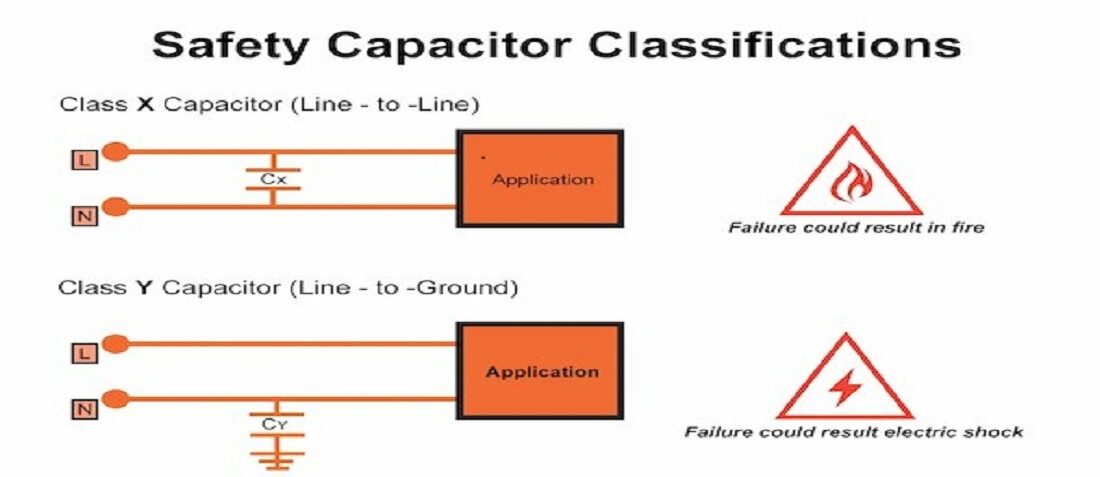
Film and foil capacitors use plastic dielectrics like polyester and polypropylene, offering self-healing and stability for power and safety applications.
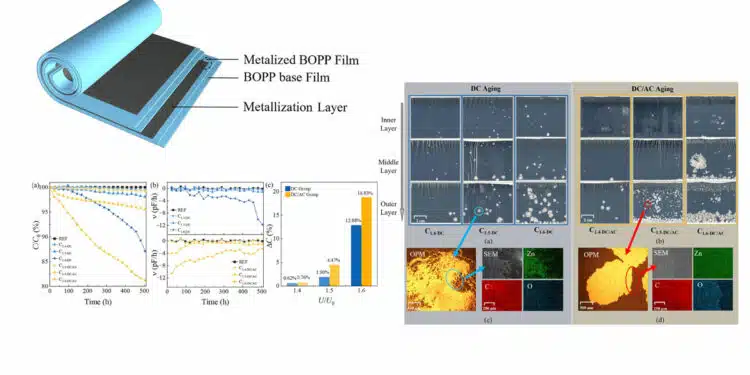
This article investigates the failure mechanisms of metallized film capacitors (MFCs) when subjected to DC fields with superimposed AC harmonics.